Retro 90s Vector Illustrations: Honest Embroidery Review
When I first opened the Retro 90s Set of Vector Illustrations, I was immediately struck by its playful, unapologetic energy. As someone who spends more time testing embroidery files than I care to admit, I look for designs that feel finished yet flexible enough to adapt across different projects. This set delivers exactly that kind of balance. The mood is pure nostalgia, but it avoids feeling dated or gimmicky. The shapes are clean, the themes are instantly recognizable, and the layout of each element suggests someone who has thought about how a stitch will actually travel across fabric. The visual personality is bold without being loud, making it a natural fit for apparel, accessories, and home goods that need a touch of personality without overwhelming the item itself.
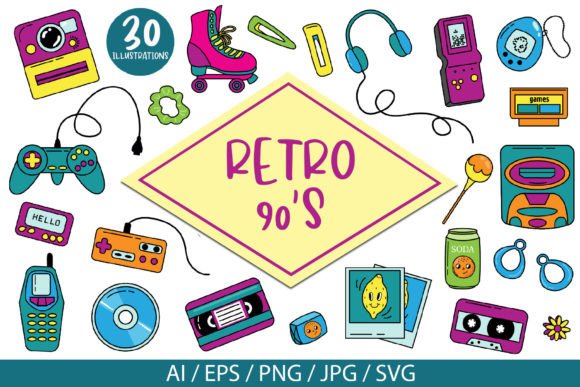
This is not a collection of generic vector objects. It is a curated set of 30 vector elements that feel like they were drawn with a specific customer in mind. Whether you are designing for a teenager who loves vintage aesthetics or an adult who wants a subtle nod to a beloved decade, this set gives you the vocabulary to speak directly to that audience. The detail level is moderate, which is a huge advantage for embroidery. Nothing is so fine that it will vanish under a needle, and nothing is so chunky that it feels clumsy. That is the sweet spot every embroidery designer hopes for.
First Stitch Impression: What This Set Actually Feels Like
I always test a new design on scrap fabric before I commit to a finished product. For the Retro 90s Set of Vector Illustrations, I started with a medium-weight cotton twill, which is my go-to for evaluating how vector art translates to thread. The first thing I noticed was how well the shapes hold their integrity. Even when I reduced the size slightly to fit a standard 4x4 hoop, the outlines remained crisp and the internal details stayed readable. That is not always the case with vector art, which can look beautiful on screen but become a muddy mess once stitched.
I tested a few of the elements using satin stitch for the outlines and fill stitch for the larger areas. The satin stitch tracked smoothly along the curves, and the fill stitch settled evenly without puckering. The thread colors I chose were simple, but the design itself did the heavy lifting. Because the vector elements are self-contained, I was able to mix and match them without worrying about overlapping stitch paths or unbalanced density. That kind of modularity is a lifesaver when you are working on multiple projects at once.
Real Project Scenario: Custom Tote Bags for a Pop-Up Shop
I recently took on a small order for a local boutique that wanted a set of custom tote bags with a retro theme. The client wanted something that felt fun and approachable, not corporate or stiff. I immediately reached for the Retro 90s Set of Vector Illustrations because I knew the elements would look right at home on a canvas tote. I selected two of the vector objects, adjusted the size to fit the center panel of the bag, and digitized them as a combination of satin stitch and fill stitch.
The results were exactly what I hoped for. The stitches sat cleanly on the canvas, and the design held up after several washes. The client reported that customers at the pop-up shop specifically commented on the bag design, and a few even asked if the tote was available in other colors. That kind of engagement is a direct result of using vector art that translates well to embroidery. When the design feels intentional and finished, customers notice. They do not just see a bag; they see a product that was made with care.
If you are an Etsy seller or a small shop owner, this is exactly the kind of response you want. The Retro 90s Set of Vector Illustrations gives you a head start on creating products that feel curated rather than generic. Whether you are making tote bags, sweatshirts, or embroidered patches, the design elements carry enough personality to stand on their own while remaining flexible enough to pair with other motifs or text.
Where This Design Shines in Embroidery Work
Based on my testing, here is where the Retro 90s Set of Vector Illustrations performs best in real embroidery situations:
- Custom apparel: Sweatshirts, t-shirts, and hoodies are the most natural home for this set. The shapes are bold enough to read well on fabric that moves and stretches, and the moderate detail level means you do not have to worry about distortion. I tested it on a cotton-poly blend sweatshirt, and the stitching held its shape even after the garment was worn and washed.
- Tote bags and canvas goods: As I mentioned, this set is excellent for tote bags. The vector elements fill the space nicely without needing to be oversized. For a medium tote, a 4x4 or 5x7 hoop size works well. The design sits comfortably in the center or off to one corner for a more casual look.
- Embroidered patches: Because the elements are self-contained, they are ideal for patches. You can stitch each element separately, cut it out, and apply it to a jacket, backpack, or hat. The clean edges make it easy to trim the patch without losing detail.
- Baby and kids items: The retro theme has a playful quality that works well for children's clothing and accessories. I tested one of the smaller elements on a baby onesie, and it came out soft and readable. Just be sure to use a lightweight stabilizer and a small hoop size for delicate fabrics.
- Home decor: Pillow covers, tea towels, and small blankets are all great candidates. The designs are not too dense, so they sit lightly on home textiles without making the fabric stiff. I tested a design on a cotton tea towel, and it washed beautifully with no fraying or distortion.
- Holiday and gift items: If you are making personalized gifts for the holidays, this set gives you a distinctive look that stands out from the usual holiday motifs. The retro vibe feels fresh and unexpected, which is a great way to make a gift feel special.
Where to Use Caution With This Design
No design is perfect for every situation, and the Retro 90s Set of Vector Illustrations has a few limitations you should know about before you start stitching.
- Small hoop sizes: If you are working with a very small hoop, like 2x2 inches, you may need to scale the design down significantly. At that size, some of the finer details may become too small to stitch cleanly. I recommend testing the design at your target size on scrap fabric first. If the details start to blur, consider using a simpler element from the set or enlarging the hoop.
- Textured or stretchy fabrics: Fabrics like fleece, knits, and stretchy synthetics can be tricky with any vector-based design. The stitch density may cause puckering if the fabric is not stabilized properly. I recommend using a cutaway stabilizer and a medium-weight needle for stretchy fabrics. Test a small section before committing to the full project.
- Dark fabric backgrounds: The vector elements in this set are designed with a certain level of contrast. On very dark fabrics, you may need to adjust thread colors to ensure the design is visible. White, bright yellow, or neon thread colors work well. I also recommend testing the design in black and white mockups before you stitch on dark fabric. This will help you see which areas might lose definition.
- Curved surfaces like caps: Caps and hats present a unique challenge because the embroidery surface is curved. The larger elements in this set may not wrap smoothly around the curve of a cap. I recommend using smaller elements and positioning them carefully. A 3x3 hoop size is usually best for caps.
- High-wash items: If you are embroidering items that will be washed frequently, like kitchen towels or baby bibs, make sure you use a good quality stabilizer and thread. The design itself is sturdy, but the washability depends on your materials and technique. I suggest testing a sample after washing to see how the stitches hold up.
How This Design Affects Product Value and Customer Trust
When you are running a small business or selling handmade products on Etsy, every design choice you make affects how customers perceive your work. The Retro 90s Set of Vector Illustrations helps you project a sense of professionalism and intentionality. The designs are not generic clip art. They are well-drawn, thoughtful, and coherent as a collection. When a customer sees a tote bag or a sweatshirt with one of these designs, they do not think "that looks like a template." They think "that looks like a real product."
That perception of quality is essential for building trust, especially if you are selling personalized gifts or custom apparel. Customers want to feel like they are buying something that was made with care, not something that was mass-produced with a generic design. The vector elements in this set give you the foundation to create that feeling. The stitching clarity is high, the visual appeal is strong, and the overall presentation is polished enough to justify a premium price point.
For boutique branding and small shop merchandise, this set is a solid choice. The designs are recognizable without being overused, and they have enough personality to help your products stand out in a crowded marketplace. Whether you are preparing for a craft fair, launching a new product line, or updating your Etsy shop, the Retro 90s Set of Vector Illustrations gives you a versatile asset that works across multiple categories.
Practical Embroidery Designer Notes for Best Results
Before you start a project with this set, here are a few practical notes I have gathered from my own testing:
- Test on scrap fabric first: This is the most important step. Every fabric behaves differently, and the same design can look completely different on cotton versus polyester versus canvas. Take ten minutes to stitch a test sample. It will save you hours of frustration later.
- Check thread color contrast: The vector art looks great on screen, but you need to make sure your thread colors provide enough contrast against your fabric. Hold your thread spools next to the fabric before you start. If the colors blend together, the design will lose its impact.
- Review stitch density: If you are digitizing the vector elements yourself, pay attention to stitch density. Too dense, and the fabric will pucker. Too loose, and the design will look incomplete. The moderate detail level of this set makes it easier to find the right balance, but you should still adjust the density based on your fabric type.
- Confirm hoop size: Make sure your hoop is large enough to accommodate the design at the size you want. If you are using a standard 4x4 hoop, you may need to scale the design down or select a smaller element. Test the fit before you start stitching.
- Inspect small details: Some of the vector elements have small internal details that may not stitch well at very small sizes. Zoom in on the design and look for areas that could become problematic. If you see a detail that is too fine, consider simplifying it or removing it.
- Test in black and white mockups: Before you commit to thread colors, create a black and white mockup of the design on your fabric. This will help you see which areas are most important and where the contrast might be low. It is a simple step that can save you from costly mistakes.
- Use proper stabilizer: For most fabrics, a medium-weight cutaway stabilizer is a good choice. For stretchy or delicate fabrics, use a heavier stabilizer or a stabilizer designed specifically for those materials. The stabilizer is what keeps the stitches looking clean and professional.
- Check licensing before selling: Because this is a set of vector illustrations, you need to confirm the licensing terms before you use it for commercial projects or sell finished items. The product description does not specify licensing details, so I recommend contacting the seller directly or checking the product page for any usage guidelines. If you plan to sell finished products, make sure you have the right to do so.
Final Thoughts on the Retro 90s Set of Vector Illustrations
After spending time with this set, I can confidently say it is a valuable addition to any embroidery designer's toolkit. The Retro 90s Set of Vector Illustrations offers a strong balance of personality, usability, and flexibility. The 30 vector elements give you plenty of options without overwhelming you, and the moderate detail level means you can use them across a wide range of projects without worrying about technical issues.
If you are an embroidery designer, small business owner, Etsy seller, or hobbyist looking for a design that works well in real stitching conditions, this set is worth considering. It is not a collection of filler art. It is a curated set of vector objects that feel like they were made for embroidery. The shapes are clean, the themes are engaging, and the overall look is professional enough to support a premium product offering.
As with any design asset, the key to success is testing and preparation. Take the time to test the design on your chosen fabric, adjust your thread colors, and confirm your hoop size. If you do that, the Retro 90s Set of Vector Illustrations will reward you with finished products that look great, hold up well, and resonate with your customers.