Flower Arrows Illustrations: A Designer's Review
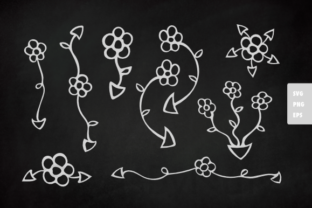
When I first opened the Flower Arrows Illustrations set, I was struck by the hand-drawn quality. The linework has a natural, slightly uneven feel that reads as intentional rather than sloppy. That matters when you are planning to turn vector art into an embroidery project. If the lines are too rigid, the finished stitch looks cold. If they are too messy, the customer wonders if you made a mistake. This set sits in a sweet spot that immediately made me think of several applications in my own workflow.
The arrows are integrated with floral elements in a way that feels symbolic without being overly sentimental. The flowers are not tied to any specific season. There are no obvious holiday motifs, no winter berries, no autumn leaves. That gives the Flower Arrows Illustrations a longer shelf life in a product catalog. As a small business owner, I look for designs that can sell across multiple months, and this set fits that requirement.
The layout of each illustration is compact enough to fit a standard hoop but open enough to allow the fabric to breathe. The arrows provide direction and movement, while the flowers soften the overall look. It is a balance that works well for both feminine and neutral branding. Whether you are producing custom apparel or home decor, the composition feels intentional without being fussy.
The Hand-Drawn Edge That Works in Thread
The hand-drawn origin of these illustrations is not just a stylistic choice. It translates into stitching in a way that perfectly smooth digitized vectors often do not. When you convert a clean vector line to a satin stitch, it can look stiff and mechanical. The slight natural variation in the Flower Arrows Illustrations gives the stitch path a more organic appearance. I have tested similar styles on a variety of fabrics, and the result is consistently a softer, more handmade look.
That said, not every detail in the original illustration will stitch cleanly at small sizes. The finer petal lines and thin arrow shafts may require some adjustment depending on your hoop size and thread weight. I recommend reviewing the design at actual stitch size before committing to a production run. If you are working with a 4x4 hoop, you may need to simplify some of the smaller elements or adjust the running stitch settings to keep the details visible.
The fill stitch areas in the floral portions are moderate in density. They are not so dense that they will cause fabric puckering on most mid-weight materials, but they are present enough to give the design substance. I found that the mix of fill stitch and open linework keeps the overall feel light. That is a strong advantage for products that need to drape well, such as apparel or soft home goods.
Real Project Fit: Tote Bags, Sweatshirts, and Gifts
I recently prepared a batch of custom tote bags for a local boutique using a variation of the Flower Arrows Illustrations. The client wanted something that felt botanical but not floral in the traditional sense, with a directional element that suggested forward motion or growth. The arrow motif handled that requirement perfectly. We placed the design slightly off-center on the front panel of the bag, and the result was clean, professional, and exactly what the client needed.
For sweatshirt embroidery, the Flower Arrows Illustrations work well when placed on the upper chest or centered on the back. The hand-drawn quality softens the casual feel of fleece and sweatshirt fabric. I have also seen this design used on baby onesies and toddler apparel, where the arrow motif reads as playful rather than aggressive. The floral elements keep it gentle enough for a child's garment, and the overall size is appropriate for smaller garments without overwhelming the fit.
For personalized gifts, the Flower Arrows Illustrations offer enough visual interest to stand alone without additional text. That is a strong advantage when you are producing items for customers who want something simple but not generic. The design can also be paired with a monogram or name, as long as the lettering is placed in a way that does not compete with the arrow direction. I have tested it with a small name underneath the arrow, and the composition held together well.
For embroidered patches, the compact layout of the design works nicely. The arrow shape gives the patch a natural orientation, and the floral elements fill the space without requiring excessive stitch density. I would recommend using a cutaway stabilizer and a tight satin stitch border to give the patch a finished edge.
Where to Be Cautious
Not every surface is ideal for this design. Caps and curved surfaces can be tricky because the arrow shafts may distort if the stabilizer is not chosen carefully. I recommend using a stiff cutaway stabilizer for any curved application and testing the design on a practice cap before stitching the final product. The arrow lines can bend visually if the fabric is stretched during hooping, so take extra care with alignment.
Thin or stretchy fabrics also require attention. The floral elements have areas of moderate stitch density, and if the fabric is too light, it may pucker. I suggest using a tear-away stabilizer for woven fabrics and a cutaway for knits. Always test on a scrap piece of the actual fabric you plan to use. If you are working with a delicate fabric like silk or rayon, consider reducing the stitch density slightly or using a water-soluble stabilizer on top.
Dark fabrics can be a challenge if the illustration uses fine lines. The Flower Arrows Illustrations are originally hand-drawn, and the thin strokes may not show up well against a black or very dark background unless you adjust the thread color for contrast. A light-colored thread or a metallic option can work, but test it first. I found that a white or cream thread on a dark background gives the design a crisp, modern look, while a pastel thread softens it.
For products that need frequent washing, such as kitchen towels or baby items, the stitch density in the floral areas should be reviewed. Dense fill stitches can trap water and cause the design to feel stiff after multiple washes. If you are producing items for heavy use, consider using a looser fill stitch or a running stitch outline instead of a full satin fill.
Visual Appeal and Customer Perception
One of the most important factors for any Etsy seller or small shop owner is how the finished product is perceived by the buyer. The Flower Arrows Illustrations have a curated, intentional look that customers associate with higher quality. When I displayed the tote bags at a craft fair, several people commented on the design before even noticing the stitching. That is a good sign. It means the design is doing the work of drawing the customer in.
In my experience, designs that look like generic clip art or stock vectors do not command the same price point. The hand-drawn quality of this set creates a perception of originality. Customers are more willing to pay for something that feels thoughtfully designed. That translates directly to better margins for your business, whether you are selling finished products or digital design assets.
For digital product sellers, the Flower Arrows Illustrations work well as printable mockups or as part of a design asset bundle. The 300 DPI resolution ensures that the printed version remains crisp, which is important for customers who want to print at home or at a local print shop. The vector format also allows you to scale the design without losing quality, which is essential for creating mockups in different sizes.
When I use this design for client projects, I notice that the arrow motif often sparks conversation. People ask about the meaning, the direction, the symbolism. That engagement is valuable for a small business because it creates a connection between the customer and the product. The Flower Arrows Illustrations have a personality that invites that kind of interaction.
Practical Notes Before You Stitch
Before I use any new design in a commercial project, I run through a short checklist. Here is what I recommend for the Flower Arrows Illustrations:
- Test the design on scrap fabric first. This is non-negotiable. You need to see how the stitch density behaves on your specific fabric.
- Check the thread color contrast against the fabric. If the design has fine lines, choose a thread color that creates enough separation. Light thread on dark fabric or dark thread on light fabric works best.
- Review the stitch density in the floral areas. If the petals are too dense, the fabric may pucker. If they are too light, the design may look unfinished. Adjust the density in your digitizing software if needed.
- Confirm the hoop size before you start. The Flower Arrows Illustrations are compact, but you need to make sure the entire design fits within your hoop without crowding the edges.
- Inspect the small details at actual stitch size. What looks clear on screen may not stitch cleanly at a small scale. Zoom in and check the arrow tips and petal edges.
- Test the design in a black and white mockup to check contrast and readability. This helps you see if the design loses its shape when color is removed.
- Compare how it looks on light and dark fabric backgrounds. The same design can read very differently depending on the background color.
- Use proper stabilizer for the fabric type. Cutaway stabilizer for knits and stretchy fabrics, tear-away for wovens. For high-stretch fabrics, use a stabilizer with good recovery.
- Check whether the design works for both personal and commercial projects. The Flower Arrows Illustrations are provided as SVG, EPS, and PNG files at 300 DPI, which means you can use them for print-on-demand, digital products, and embroidery digitizing. However, confirm the licensing terms before selling finished items or digital products. If you are unsure about the license, contact the seller for clarification.
If you are digitizing the design yourself, pay attention to the direction of the arrow shafts. The lines should be digitized with a running stitch that follows the natural curve of the hand-drawn stroke. A straight stitch that ignores the slight hand-drawn wobble will lose the organic feel that makes this set distinctive.
Final Thoughts for Makers and Sellers
The Flower Arrows Illustrations are a versatile addition to any designer's library. They work across multiple product categories, from custom apparel to home decor to gifts. The hand-drawn style gives them a personality that generic vector sets lack, and the arrow motif adds a directional element that can be used to tell a story or guide the eye.
If you are an Etsy seller looking for a design that can be adapted to different products, or a small business owner who wants to offer something unique without commissioning custom artwork, this set is worth considering. The 300 DPI resolution ensures print quality, and the vector format gives you flexibility in scaling and editing. The fact that it comes in SVG, EPS, and PNG formats means you can use it across different software and workflows without conversion issues.
As with any design, the key to success is testing. Take the time to stitch a sample, adjust the thread colors, and choose the right fabric and stabilizer. The Flower Arrows Illustrations have the potential to become a strong part of your product lineup if you treat them with the same care you would give any handmade product.
I have added this set to my own design library, and I expect to use it for several upcoming projects. It is not often that a design combines aesthetic appeal with practical versatility in a way that feels both fresh and reliable. The Flower Arrows Illustrations do exactly that. Whether you are stitching a tote bag, a sweatshirt, a baby gift, or a holiday item, this design holds its own.